As a highly industrialized and land-constrained economy, Singapore faces significant challenges in decarbonizing its industrial sector, particularly the petrochemical, refining, and chemical industries concentrated on Jurong Island. Singapore emitted approximately 55.5 MtCO₂e in 2023, with the industrial sector accounting for the majority of direct emissions due to the concentration of energy-intensive activities (NEA, 2026). Consequently, to meet its target of reducing emissions to around 45-60 MtCO₂e by 2035 and achieving net-zero by 2050, Singapore must deploy technologies such as hydrogen, CCS1, and electrification, all of which require substantial infrastructure investment (NCCS, 2025). Rather than developing these systems individually, Singapore has increasingly adopted a shared infrastructure model, allowing multiple industrial users to utilize common energy, carbon management, and utility systems to reduce costs and improve efficiency.
Jurong Island: Singapore’s Anchor Decarbonization Platform
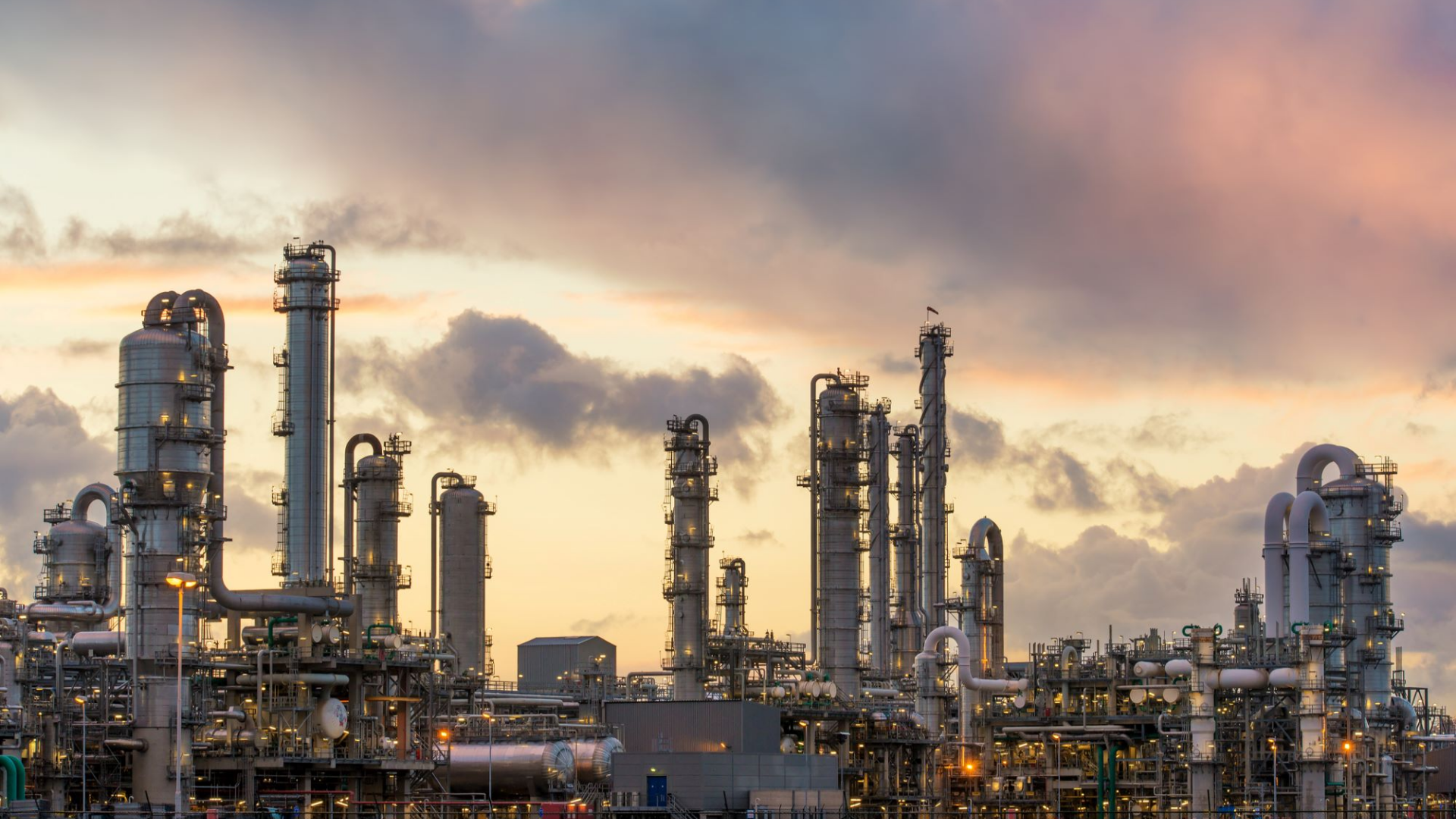
Jurong Island, a 32 km2 integrated energy and chemicals hub, is home to more than 100 global energy and chemical companies, including Shell, ExxonMobil, and BASF (JTC Singapore, 2025). Built on a foundation of shared utilities, pipelines, storage facilities, and logistics infrastructure, the island is a key focus of Singapore’s Jurong Island Sustainable Energy Master Plan (JISEP2), which aims to accelerate industrial decarbonization through shared energy and carbon management infrastructure.
A key pillar of JISEP is the development of shared hydrogen infrastructure. Under Singapore’s National Hydrogen Strategy in 2022, hydrogen could potentially meet up to 50% of the country’s power needs by 2050 (MTI, 2022). While a dedicated hydrogen network has not yet been deployed, Jurong Island already benefits from shared pipelines, utilities, storage facilities, and port infrastructure that can support future hydrogen adoption. To reduce costs and avoid duplicative investments, Singapore is exploring common hydrogen and ammonia import, storage, and distribution facilities, supported by industry collaborations involving companies such as Shell, Sembcorp, and Keppel.
Singapore is also evaluating a shared CCS backbone, where emissions from multiple facilities are aggregated through a common CO₂ collection and transport network before being exported to regional storage sites. The Singapore Government has also commissioned private-sector consortiums, such as ExxonMobil and Shell, to assess the feasibility of cross-border CCS solutions (EDB, 2024). Given Singapore’s limited domestic storage potential, ongoing feasibility studies have focused on cross-border CCS partnerships. Together, these initiatives demonstrate how shared infrastructure can improve economies of scale and enhance the commercial viability of emerging decarbonization technologies.
Industrial Symbiosis and Resource Recovery: Tuas Nexus
Another example of Singapore’s shared infrastructure approach is Tuas Nexus, an integrated waste and water treatment facility jointly developed by NEA3 and PUB4. By co-locating the Integrated Waste Management Facility and the Tuas Water Reclamation Plant, the project creates synergies between waste and water treatment processes.
From a decarbonization perspective, Tuas Nexus functions as a form of industrial symbiosis, where food waste and used water sludge are co-digested to produce biogas, while recovered water and resources are reused within the system. The integrated design is expected to generate carbon savings of more than 200,000 tonnes of CO2, while improving resource and energy efficiency (NEA, 2020).
Integrating two traditionally separate sectors differed operational requirements, institutional responsibilities, and caused high upfront cost of shared infrastructure. However, the project successfully resolved this through early-stage collaboration between PUB and NEA, and an integrated design approach, which reduced emissions, improved resource efficiency, and lowered infrastructure costs simultaneously.
Beyond Singapore: Expanding Shared Decarbonization Infrastructure
A flagship example of regional infrastructure sharing is the Lao PDR–Thailand–Malaysia–Singapore Power Integration Project (LTMS-PIP), Southeast Asia’s first multilateral cross-border electricity trading initiative. Launched in 2022, the project enables up to 200 MW of renewable electricity from Laos to be transmitted through Thailand and Malaysia before being imported into Singapore through existing interconnection (Keppel, 2024). Hence, these countries can share energy assets across borders, reducing investment duplication while expanding access to low-carbon electricity, while supports Singapore’s ambition of importing 6 GW of low-carbon electricity by 2035. (EMA, 2025).
As the first multilateral electricity trading arrangement in Southeast Asia, additional complexities included managing cross-border electricity flows, ensuring transmission reliability, and establishing credible mechanisms for renewable energy tracking and accounting. Singapore and its regional partners addressed these challenges through a phased pilot approach, initially limiting imports to 100 MW before considering future expansion (Keppel, 2024). Participating entities also had to establish credible accounting frameworks by utilizing mutually recognized, cross-border Renewable Energy Certificates (RECs5) and environmental attributes (I-TRACK, 2024).
Governance and Policy Enablers
Singapore’s shared infrastructure strategy is anchored by the Singapore Green Plan 2030, which serves as the country’s overarching sustainability framework and coordinates decarbonization efforts across multiple agencies, including MTI6, MAS7, NEA, EDB8, and JTC9. Within this framework, EDB and JTC play a central role as co-conveners, bringing together industrial users, infrastructure developers, technology providers, and financiers to facilitate shared infrastructure projects. Through this, the government helps de-risk investments in emerging technologies such as hydrogen and CCUS. The development of Jurong Island itself reflects this approach, where centralized planning has enabled companies to benefit from shared infrastructure.
Carbon pricing further strengthens the business case for collective decarbonization. Singapore’s carbon tax increased to S$25/tCO₂e in 2024, will rise to S$45/tCO₂e by 2026–2027, and is expected to reach S$50–80/tCO₂e by 2030 (NEA, 2024). As compliance costs increase, shared infrastructure becomes increasingly attractive, allowing multiple users to distribute capital and operating costs while improving the economics of emerging technologies such as hydrogen and CCS.
Implications for Carbon Markets and ASEAN Industrial ClustersSingapore’s experience illustrates how shared infrastructure can enhance industrial decarbonization while creating opportunities for high-integrity carbon market development.
- Shared infrastructure can improve local and regional carbon market readiness.
The model can improve MRV efficiency, lower verification costs, and increase economic viability, while supporting future cross-border emissions reduction activities under Article 6, creating opportunities for future cross-border emissions reduction activities. - Government coordination is critical to scaling industrial decarbonization.
Coordinated planning, regulatory certainty, carbon pricing, and public-sector support help de-risk investments in emerging decarbonization technologies. - Singapore’s shared infrastructure offers a blueprint for ASEAN industrial clusters.
Shared hydrogen, CCUS, and energy infrastructure can help industrial hubs such as Indonesia’s Cilegon area reduce decarbonization costs and accelerate industrial transition.
- CCS: Carbon Capture and Storage ↩︎
- Singapore’s Jurong Island Sustainable Energy Master Plan (JISEP) is a part of the Singapore Green Plan 2030 to transforms the island into a sustainable Energy and Chemicals (E&C) cluster. ↩︎
- NEA: National Environment Agency Singapore ↩︎
- PUB: National Water Agency Singapore ↩︎
- Renewable Energy Certificate (REC) is a tradeable, market-based instrument that proves 1 MWh of electricity was generated from a renewable energy source (solar, wind, hydropower, etc.) and delivered to the grid ↩︎
- MTI: Ministry of Trade and Industry ↩︎
- MAS: Monetary Authority of Singapore ↩︎
- EDB: Singapore Economic Development Board (EDB) ↩︎
- JTC: Jurong Town Corporation ↩︎